
Garage floors face more than everyday foot traffic. Vehicles introduce heat, pressure, rubber residue, and repeated temperature changes that can affect the performance of floor coatings over time. One common concern among homeowners is hot tire pickup, a problem that occurs when warm tires interact with a coated concrete surface and cause sections of the coating to lift or separate.
Choosing the right flooring system can help prevent this issue and protect the concrete underneath. Hot tire pickup resistant floor coatings are designed to withstand the demands of regular vehicle use while maintaining a durable, attractive finish. Superior Garage Flooring recognizes the importance of selecting appropriate coating systems for garages where long-term surface performance matters.
Understanding how hot tire pickup occurs, what contributes to coating failure, and which installation factors influence durability can help homeowners make better decisions about their garage flooring projects.
What Is Hot Tire Pickup in Garage Flooring?
Hot tire pickup refers to the lifting, peeling, or separation of a floor coating caused by contact with warm vehicle tires. After driving, tires can retain considerable heat. When a vehicle enters a garage and remains parked on a coated concrete floor, that heat and the pressure from the tires can contribute to adhesion problems.
The issue is particularly noticeable when a coating has not bonded properly to the concrete or lacks the performance characteristics needed for vehicle traffic.
Several factors can contribute to hot tire pickup:
- Insufficient surface preparation: Dust, oil, grease, and existing coatings can interfere with proper adhesion.
- Moisture-related problems: Excess moisture within or beneath concrete can affect coating performance.
- Incompatible coating materials: Some products may not be suitable for repeated exposure to vehicle heat and tire contact.
- Improper application: Incorrect mixing, inadequate coverage, and unsuitable curing conditions can compromise the finished surface.
- Premature vehicle traffic: Parking on a coating before it has fully cured can increase the risk of damage.
Understanding these causes helps homeowners recognize why product selection and professional installation are equally important.
Why Hot Tire Pickup Resistant Floor Coatings Matter
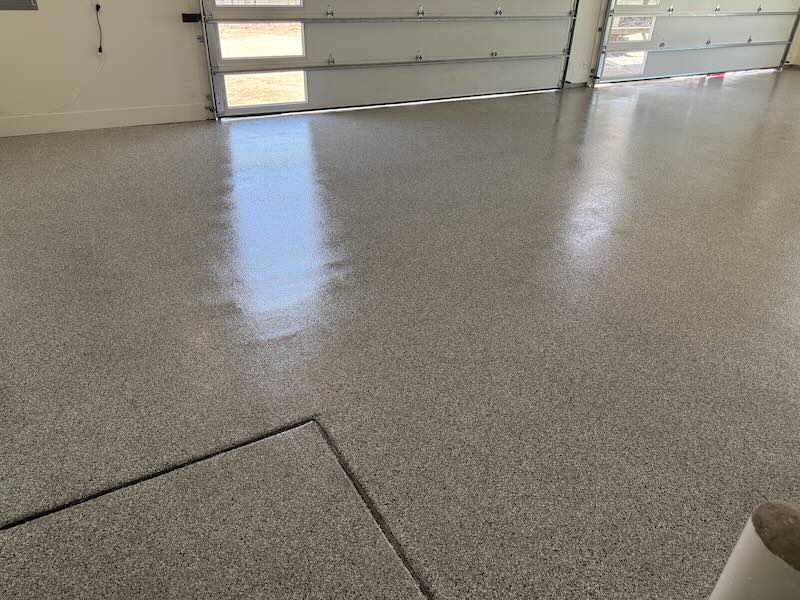
A garage floor must handle conditions that differ considerably from those found in typical indoor living spaces. Vehicles repeatedly enter and leave, tires generate heat through friction, and parked cars place concentrated loads on relatively small areas of the floor.
Ordinary decorative coatings may not provide the performance needed for these conditions. A suitable garage flooring system should maintain its bond with the concrete while resisting the physical and environmental stresses associated with vehicle storage.
Hot tire pickup resistant floor coatings offer several practical advantages.
Better Adhesion Under Vehicle Traffic
Adhesion determines how effectively a coating remains attached to the concrete substrate. A properly selected and installed system helps reduce the likelihood of peeling when warm tires remain in contact with the floor.
However, even high-performance coating materials cannot compensate for poor preparation. The concrete must be clean, appropriately profiled, and suitable for the selected product.
Improved Resistance to Daily Wear
Garages experience repeated mechanical stress from vehicle movement, parking, equipment, and foot traffic. A durable coating system helps protect the underlying concrete against everyday wear.
The right product should be selected according to the garage’s intended use, expected traffic, and exposure conditions.
Easier Routine Maintenance
A properly installed coating creates a more manageable surface for everyday cleaning. Dust, dirt, and certain automotive residues can generally be removed more easily than from untreated concrete, depending on the coating’s finish and maintenance requirements.
This makes regular garage upkeep more convenient while helping the floor maintain its appearance.
How to Choose a Coating That Resists Hot Tire Pickup
Not every garage floor coating offers the same level of performance. Homeowners should consider several technical and practical factors before selecting a system.
1. Evaluate the Coating Material
Epoxy and polyaspartic coatings are commonly used in garage flooring because of their different performance characteristics.
Epoxy systems are valued for their adhesion, hardness, and ability to create a durable surface when properly installed. Polyaspartic coatings are known for their chemical resistance, abrasion resistance, and relatively fast curing characteristics.
Neither material should automatically be considered the best option for every garage. Performance depends on the specific formulation, manufacturer specifications, installation conditions, and compatibility with the concrete substrate.
Homeowners should review technical data sheets to determine whether a product is suitable for hot tire exposure and repeated vehicle traffic.
2. Check the Product’s Adhesion Properties
A coating’s ability to bond with concrete plays an important role in preventing premature failure. Look for manufacturer information regarding adhesion strength, recommended surface preparation, and approved substrate conditions.
It is also useful to ask whether the system has been tested under conditions relevant to residential garage use.
Product claims should be supported by technical documentation rather than relying exclusively on general descriptions such as heavy-duty or industrial-strength.
3. Consider Chemical and Abrasion Resistance
Vehicle storage introduces more than heat. Oil, gasoline, brake fluid, cleaning products, and road contaminants can also come into contact with garage floors.
A suitable coating should provide resistance to the substances commonly encountered in the space. Abrasion resistance is another important consideration because tires, tools, and equipment can gradually wear down the finished surface.
Comparing these characteristics helps homeowners select a system that addresses multiple garage flooring challenges.
Why Concrete Preparation Determines Coating Performance
Even the most advanced coating products require a properly prepared substrate. Concrete preparation is one of the most important stages of a garage flooring installation because it directly affects how well the coating bonds with the surface.
The process generally begins with an inspection of the existing concrete. Installers look for cracks, damaged areas, oil contamination, moisture concerns, and previous coatings that could interfere with the new application.
Mechanical preparation, such as diamond grinding, is commonly used to remove surface contaminants and create an appropriate concrete profile. This helps the coating establish a stronger mechanical bond with the substrate.
Depending on the condition of the floor, preparation may also involve:
- Removing old or poorly bonded coatings.
- Cleaning oil and grease contamination.
- Repairing cracks and damaged concrete.
- Addressing moisture-related concerns.
- Removing dust and loose surface materials before application.
Moisture testing is particularly important because excessive moisture can contribute to coating adhesion problems and other forms of flooring failure. Installers should follow the coating manufacturer’s requirements for acceptable moisture conditions before proceeding.
Skipping these steps can undermine the performance of the entire flooring system, regardless of the quality of the coating material.
The Importance of Proper Application and Curing
Once the concrete is prepared, the coating must be applied according to the manufacturer’s instructions. Mixing ratios, application thickness, temperature, humidity, and recoat intervals can all influence the final result.
Applying too much or too little material may affect the coating’s appearance and performance. Likewise, environmental conditions outside the recommended application range can interfere with curing and bonding.
Curing deserves particular attention. A coating may feel dry to the touch before it reaches the level of hardness and chemical resistance required for regular use.
Homeowners should follow the manufacturer’s specified waiting periods for:
- Light foot traffic.
- Moving furniture or garage equipment.
- Parking passenger vehicles.
- Exposure to chemicals or routine cleaning.
Allowing sufficient curing time helps the flooring system develop its intended properties before being exposed to vehicle weight and warm tires.
Common Signs of Hot Tire Pickup and Coating Failure
Recognizing early signs of coating problems can help homeowners address damage before it spreads across a larger area.
Some common warning signs include:
- Peeling around parking areas: Coating begins separating where vehicle tires regularly rest.
- Flaking or chipping: Small sections of the finish break away from the concrete.
- Rubber marks and discoloration: Tire residue remains visible after ordinary cleaning.
- Bubbling or blistering: Raised areas appear beneath the coating, potentially indicating adhesion or moisture-related issues.
- Exposed concrete: Sections of the original slab become visible as the coating separates.
Not every tire mark indicates coating failure. Rubber transfer can occur even on intact flooring, and some marks can be removed through appropriate cleaning.
However, visible peeling or separation should be assessed to determine whether the problem involves surface contamination, poor adhesion, moisture, or another installation issue.
Protect Your Garage Floor With the Right Coating System
A reliable garage flooring project depends on more than choosing an attractive finish. The coating must be compatible with the concrete, suitable for vehicle traffic, and installed under the correct conditions.
Homeowners should compare product specifications, ask about surface preparation methods, and confirm the recommended curing period before allowing vehicles back onto the floor. Choosing hot tire pickup resistant floor coatings can help reduce the risk of premature peeling and support better long-term flooring performance.
For homeowners considering a garage flooring upgrade, Superior Garage Flooring offers an option worth considering when evaluating suitable solutions for protecting concrete surfaces. Prioritizing material quality, proper preparation, and installation standards can help maintain a durable, attractive, and easier-to-maintain garage floor.